REAL-TIME AI CHAT WITHOUT STREAMING INFRA: ASYNC + WEBHOOKS + FAILOVER
A webhook-first pattern can deliver a "streaming" chat UX without running WebSockets/SSE by combining async workers, webhook callbacks for partial responses, an...
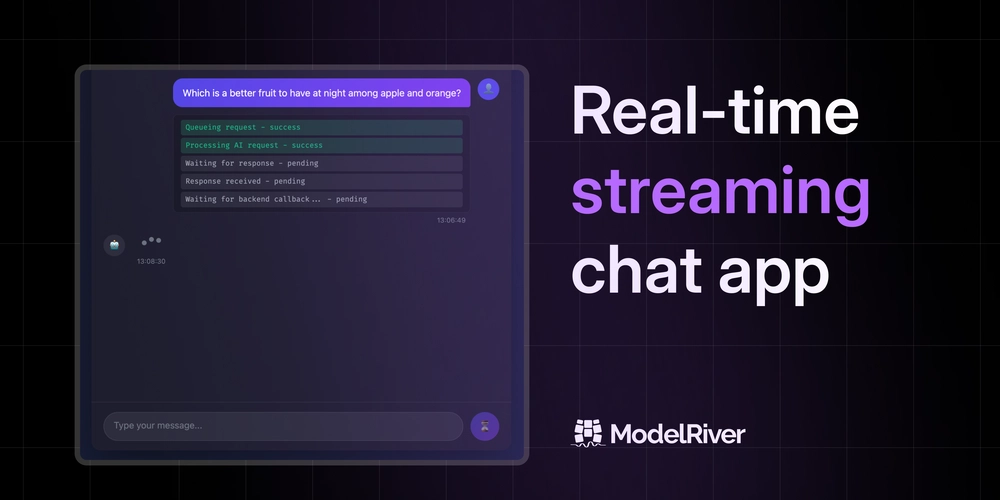
A webhook-first pattern can deliver a "streaming" chat UX without running WebSockets/SSE by combining async workers, webhook callbacks for partial responses, and a failover path for reliability—outlined in this guide: Build a real-time streaming AI chatbot with zero streaming infrastructure1. This approach targets real-time token delivery, resilience to network hiccups, and simpler ops compared to maintaining dedicated streaming infrastructure.
-
Adds: Architecture pattern and implementation approach for async + webhooks + failover to emulate streaming UX. ↩
Avoids operating WebSockets/SSE while preserving real-time UX for AI chat.
Improves resilience via callback + failover patterns on unreliable networks.
-
terminal
Benchmark end-to-end latency and token cadence vs SSE/WebSocket baselines.
-
terminal
Validate idempotency, retries, and ordering guarantees for webhook events under failure.
Legacy codebase integration strategies...
- 01.
Add webhook receivers behind your API gateway and introduce correlation/idempotency keys without refactoring chat orchestration.
- 02.
Migrate streaming endpoints incrementally via feature flags, keeping legacy paths as fallback.
Fresh architecture paradigms...
- 01.
Adopt webhook-first async execution with a clear event schema and retry/backoff policies.
- 02.
Design clients to handle partial updates and seamlessly switch to a failover path.