GITHUB COPILOT’S HYDRAFUSION TURNS MODEL CHOICE INTO RUNTIME WORKFLOWS
GitHub Copilot introduced HydraFusion, a research-preview router that builds per-request, multi-model workflows to balance quality, latency, and token cost. Hy...
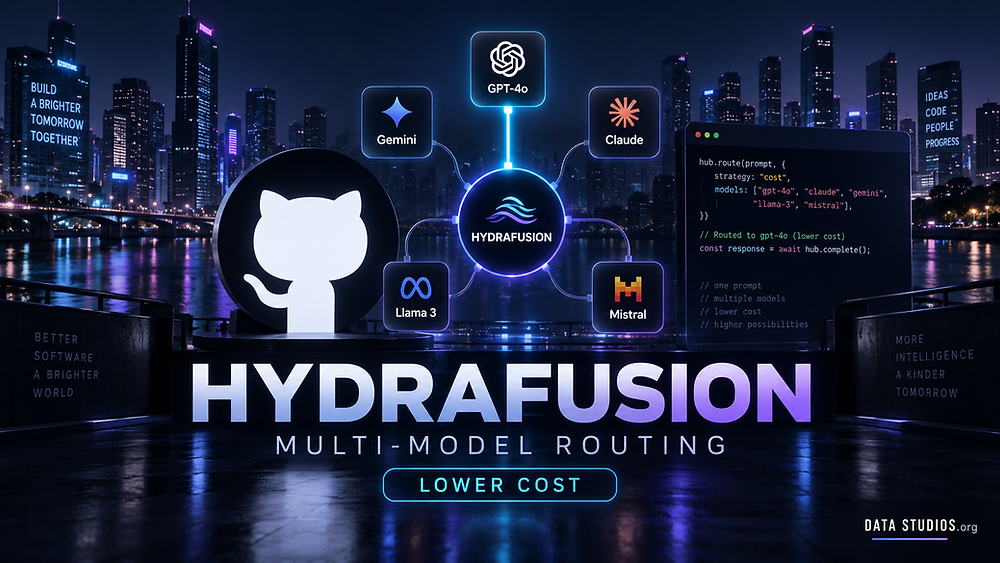
GitHub Copilot introduced HydraFusion, a research-preview router that builds per-request, multi-model workflows to balance quality, latency, and token cost.
HydraFusion inside Copilot moves past “pick one model” and instead assembles Single, Cascade, or Critique plans at runtime, escalating only when a quality gate says so. It’s available to all Copilot plans via the experimental mode in Copilot CLI, with billing passed through to the underlying models at normal rates details.
If you trial this, ground it in evidence. Speculative decoding can preserve distribution but still yield different-looking outputs, which confuses evals explainer. Benchmark harness bugs can dwarf model effects; fix parsers, prompts, and resets before judging agent quality case study. Keep orchestration simple where possible (a repo-local “board” works for small teams, idea), and consider agent-facing docs via MCP to reduce hallucinated context Mintlify profile.
Model choice becomes a per-request workflow with quality gates, which can cut token spend without tanking code quality.
You can standardize a cheap-first, escalate-when-needed pattern instead of hardwiring a single premium model.
-
terminal
Shadow-run Single vs Cascade vs Critique on a representative repo and compare token/task, p50/p95 latency, acceptance rate, and post-merge defect rate.
-
terminal
Tune quality gates: vary escalation thresholds and reviewer-model families; audit provider mix, data egress, and logs for governance.
Legacy codebase integration strategies...
- 01.
Enable Copilot CLI experimental mode and start with Cascade on low-risk tasks; measure cost and review deltas before wider rollout.
- 02.
Update data handling policies since work may touch multiple model providers; ensure org-wide allowlists and auditable logs.
Fresh architecture paradigms...
- 01.
Design agents around workflow patterns (cheap-first, escalate-later, independent critique) with explicit gates and traceable decisions.
- 02.
Make docs agent-addressable early (MCP) and invest in eval harnesses that detect harness bugs before blaming models.
Get daily GITHUB + SDLC updates.
- Practical tactics you can ship tomorrow
- Tooling, workflows, and architecture notes
- One short email each weekday